
Keeping critical infrastructure data publicly available
What HIFLD Open was
HIFLD — Homeland Infrastructure Foundation-Level Data — was a Department of Homeland Security portal built after 9/11. It gathered agency data on America’s critical infrastructure, from power substations to nursing homes to water-treatment plants, into one authoritative reference that planners and researchers could trust. Communities relied on it during events like Hurricane Maria and the 2018 Camp Fire. When DHS took the portal offline, the Data Rescue Project captured a full snapshot of its 400-plus data layers and associated metadata.
What HIFLD Next does
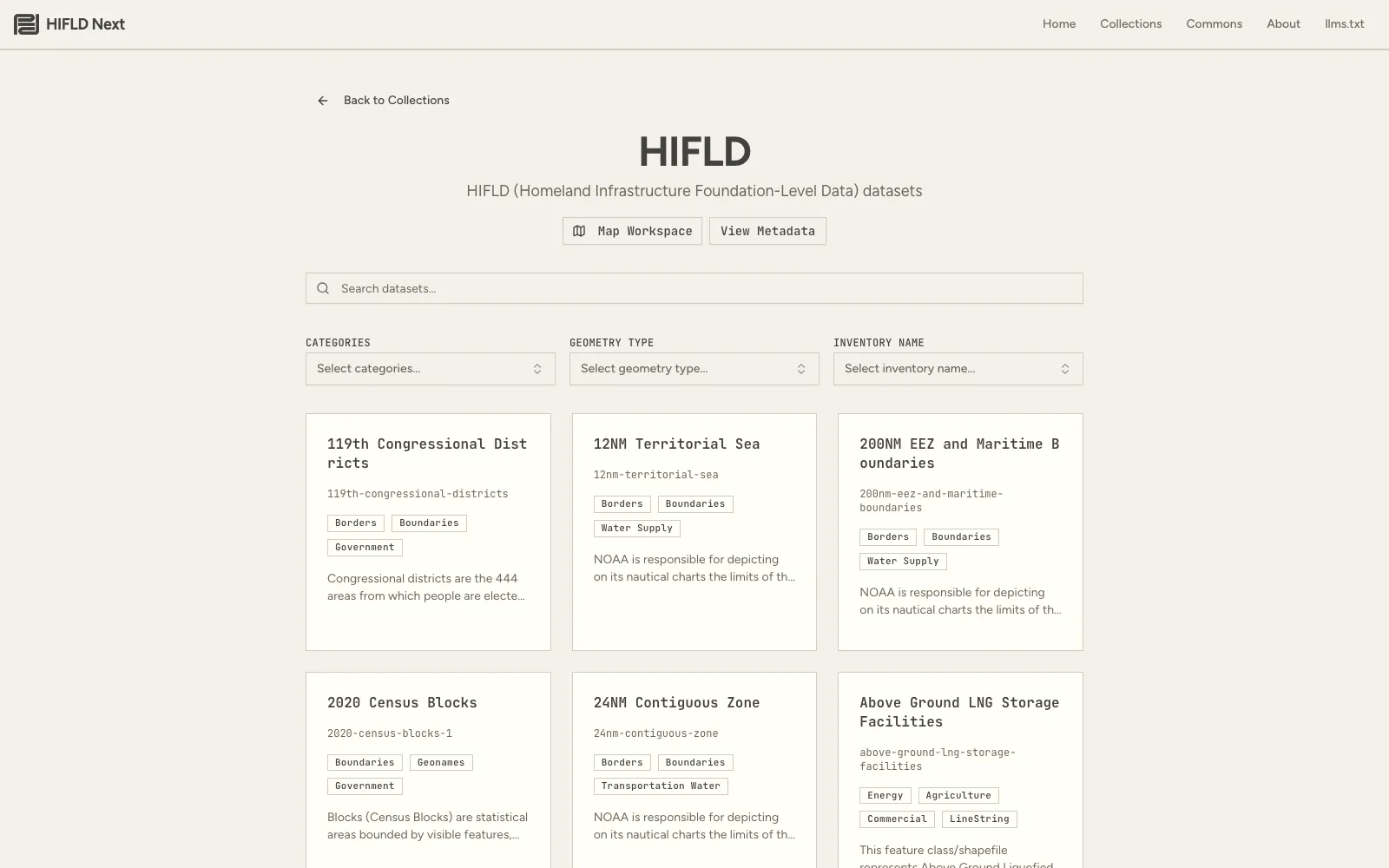
Public Environmental Data Partners and Fulton Ring launched HIFLD Next from that preserved collection. The catalog lets users search the datasets, preview them in a map or table viewer, and download them in the format that fits their workflow: GeoParquet, PMTiles, GeoJSON, shapefile ZIPs, and file geodatabases. Preserved metadata stays visible, and data versioning keeps a record of what changed as the catalog evolves.
Alongside the platform, the partners are forming the HIFLD Next Commons, a coalition of mission-driven organizations committed to stewarding and expanding the catalog.
How it is built
The public webapp is a TanStack Start application with a public JSON API, backed by a FastAPI catalog service for collections, datasets, files, and formats. Artifacts live in Google Cloud Storage, and Dagster on GKE owns ingestion and data operations. The public repository, licensed AGPL-3.0, exposes the application and delivery services for technical review, and the live site credits Fulton Ring as its maker.
Related work
Tell us where the current process breaks down.
Show us the current process and the records people trust.